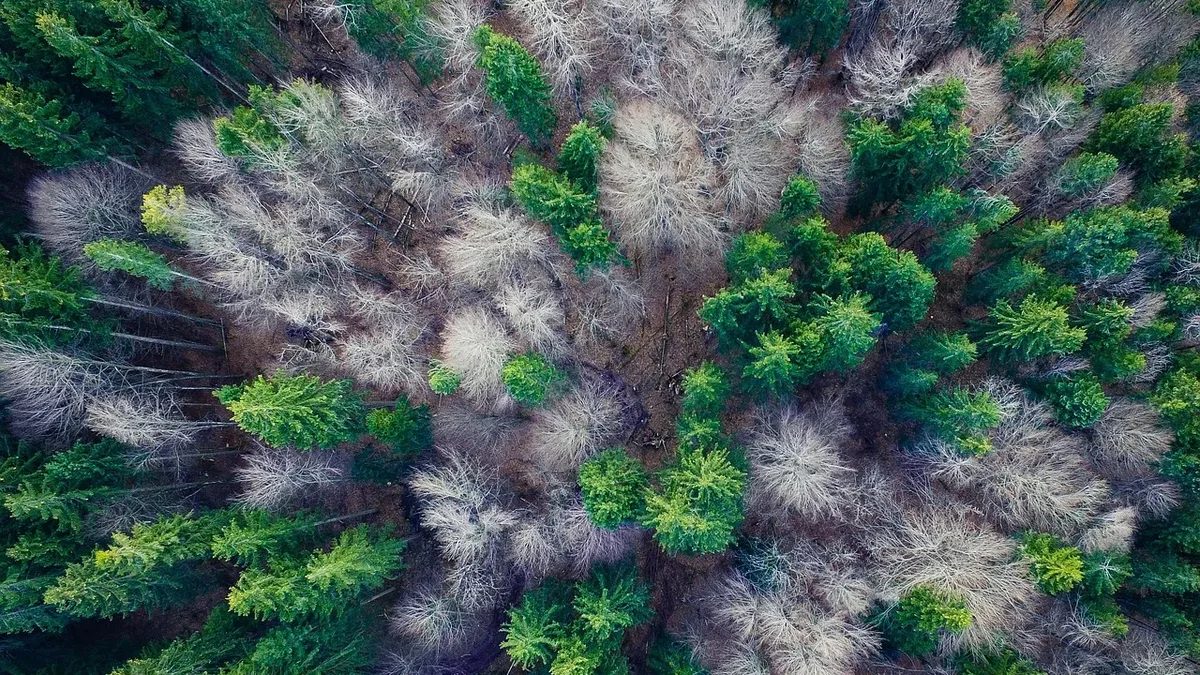
Woodland And Ancient Forest
| Geographic scope | Typically national or regional (e.g., UK, EU) |
|---|---|
| Legal designation | Often SSSI, SAC, or Ancient Woodland Inventory |
| Key tree species | Native broadleaf species (e.g., oak, beech, birch) |
| Understorey characteristic | Rich in native flora (e.g., bluebells, wood anemone) |
| Soil condition | Undisturbed, often ancient soil profiles |
| Deadwood presence | High volume of standing deadwood and fallen timber |
| Management focus | Non-intervention or minimal intervention |
| Access | Usually footpath access only, often on permissive routes |
| Age threshold for 'ancient' | Typically 400+ years (varies by country) |
Overview
Woodland and Ancient Forest ecosystems are characterized by stands of trees that have existed for centuries, often since the original natural forest cover of a region. These ecosystems develop complex structures over long periods, including diverse canopy layers, deadwood habitats, and undisturbed soils. Ancient forests specifically refer to those that have maintained continuous woodland cover for several hundred years, allowing for ecological continuity. The protection regime for these areas is a legal and management framework designed to conserve their ecological integrity, biodiversity, and cultural heritage. This regime typically involves designations like Site of Special Scientific Interest (SSSI), Ancient Woodland Inventory status, and National Nature Reserve, which impose restrictions on development and forestry operations. The core aim is to prevent further loss and degradation, promoting natural processes and protecting rare species dependent on these stable, long-established habitats.
What to know
Legal protection often prohibits the removal of trees, soil disturbance, and changes in land use without specific consent from statutory nature conservation bodies. A key component is the Ancient Woodland Inventory, a non-statutory register that identifies woods present since at least 1600 in England, Wales, and Scotland, which is a material consideration in planning decisions. Management within protected woodlands frequently shifts from commercial timber production to conservation-oriented practices, such as minimal intervention and the retention of deadwood. The condition of these ecosystems is frequently assessed as "unfavourable" due to historical factors like invasive species, deer browsing pressure, past plantation forestry, and fragmentation. Restoration efforts are a major focus, involving the gradual removal of non-native conifer stands and the reinstatement of native tree species composition. Public access may be managed to prevent damage to sensitive ground flora and soil compaction, with some areas having no formal rights of way.
Common questions
A common question is whether an owner can manage or cut trees in a protected ancient woodland, which is possible but requires detailed assessment and often formal consent to ensure operations do not harm conservation interests. People often ask about the difference between an ancient woodland and a plantation on an ancient woodland site (PAWS), the latter being where the original native trees were replaced with non-native species but the ancient soils and ecological memory remain. Many inquire if public access is always allowed, and the answer is that it depends on the specific designation and landowner permissions, with many ancient woods being privately owned. Questions arise regarding the definition of "ancient," which varies by country but generally signifies continuity since the medieval period or earlier, long before modern forestry. Landowners frequently seek clarification on available grants for restoration, which exist but come with stringent conditions and long-term commitments. There is also confusion over whether protection prevents any change, whereas the regime often actively manages for dynamic processes like natural regeneration and gap creation.
Pros and cons
A significant pro is the robust, long-term security it provides for irreplaceable habitats, safeguarding complex ecological networks and rare species that cannot be recreated elsewhere. The regime also protects cultural and historical features, such as archaeological remains and old woodland boundaries, that are embedded within the landscape. A major con is the substantial restriction on landowner autonomy, limiting economic uses like timber production, development, or even changes to agricultural practices on associated land. Those who regret choosing to engage with the regime are often small landowners seeking liquidity or flexibility, who find the management consent process slow, costly, and a barrier to asset realization. A common mistake is assuming the designation only protects trees, when it actually encompasses the entire ecosystem, leading to conflicts over underground works, drainage alterations, or even recreational infrastructure. The focus on restoration can also lead to decades of reduced aesthetic and economic value during the transition from conifer plantations back to native broadleaf stands, testing landowner patience.
Who it suits
This protection regime suits dedicated conservation bodies, such as wildlife trusts and the National Trust, whose core mission aligns with long-term habitat stewardship and public benefit. It is appropriate for patient, non-commercial landowners who derive primary value from the heritage and ecological significance of their land rather than its financial yield. The regime suits ecologists and forest managers specializing in conservation forestry, who are skilled in techniques like selective thinning and invasive species control within strict ecological parameters. It is also suited to public agencies responsible for fulfilling national and international biodiversity targets, such as halting the decline of ancient woodland. Large estate owners with diverse landholdings can often integrate a protected ancient woodland as a loss-leading conservation asset within their wider portfolio. Finally, it suits research institutions and citizen scientists interested in studying ecological continuity and the effects of long-term environmental change on a stable ecosystem.