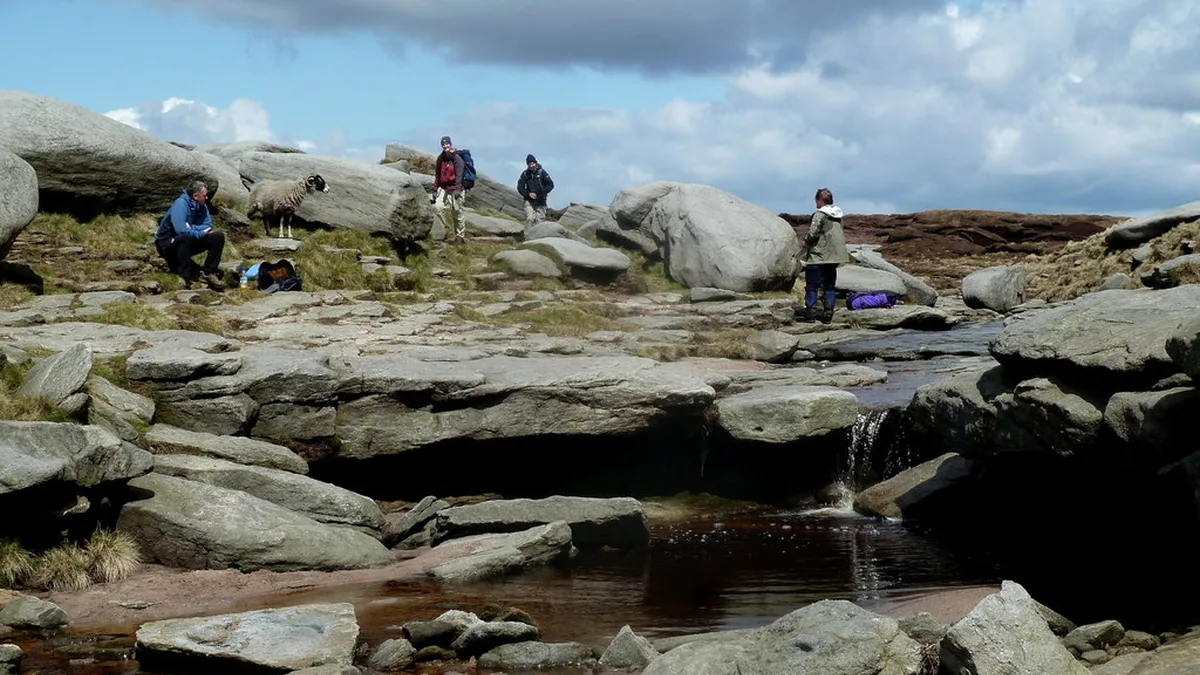
Access To Nature And Right To Roam
| Legal tradition | Common law (e.g., UK, Nordic countries) vs. civil law |
|---|---|
| Core principle | Public access to uncultivated land for recreation |
| Typical permitted activities | Walking, hiking, cycling, swimming, foraging for berries/mushrooms |
| Typical restrictions | No trespass on dwellings, gardens, or cultivated fields; no damage to property or wildlife |
| Key statutory example | Scotland's Land Reform (Scotland) Act 2003 |
| Associated concept | Leave No Trace ethics |
| Primary land types covered | Mountains, moorland, heath, downland, forest, coastline |
Origin and history
The legal concept of a public "Right to Roam" has its origins in the Nordic countries of Northern Europe, particularly Sweden and Norway, where customary access rights have existed for centuries. These traditional practices, known as "Allemansrätten" in Sweden, were formally codified into national law in the mid-20th century. The principle spread to other parts of Europe, with Scotland establishing a comprehensive statutory right through its Land Reform (Scotland) Act in the early 2000s. In contrast, many other countries, like England and Wales, operate under a more restrictive system of designated public rights of way and permitted access lands established largely in the latter half of the 20th century. The philosophical underpinnings for a right to access nature are also deeply rooted in Romantic movements that emphasized the spiritual and recreational value of wilderness. The modern debate often centers on balancing these historical access traditions with contemporary land uses and ownership models.
What it is for
Access to Nature and Right to Roam frameworks are designed to secure public access to open land for recreation and quiet enjoyment, irrespective of private ownership. Their primary purpose is to promote physical and mental well-being by allowing people to walk, hike, cycle, and sometimes camp on certain types of uncultivated land. These laws aim to foster a connection with the natural environment and a sense of shared stewardship over the landscape. They serve to democratize the enjoyment of scenic or wild areas that are considered part of a nation's natural heritage. The frameworks also intend to reduce conflicts by clearly defining where the public can go and what activities are permissible, providing legal certainty for both users and landowners. Furthermore, they support rural economies by encouraging outdoor tourism and enabling access to the countryside for educational and scientific purposes.
Overview
Access to Nature and Right to Roam is a legal principle granting the public certain freedoms to access private land for recreational purposes, typically without needing to seek explicit permission. The scope of the right varies significantly by jurisdiction, with some systems granting broad access to mountains, moors, heaths, downs, and coastal areas, while others are limited to a network of narrow footpaths. Core responsibilities for the public almost universally include a duty to avoid causing damage, to respect privacy, to keep dogs under control, and to leave no trace of their visit. Landowner responsibilities generally involve tolerating this access provided it is exercised responsibly and not obstructing it with unlawful deterrents. The regime does not usually grant a right to access cultivated land, gardens, or areas immediately around dwellings. Enforcement and management often involve government agencies, non-governmental organizations, and sometimes dedicated access authorities working with local communities.
What to know
The specific activities permitted under a right to roam, such as walking, picnicking, climbing, or wild camping, are precisely defined by law and differ between countries and regions. Access is nearly always on foot, with provisions for cycling, horse riding, or other activities being much more restricted and often confined to specific trails. Critical restrictions universally include prohibitions on lighting fires, disturbing livestock, damaging fences or walls, leaving gates open, and trespassing on buildings or curtilage. Users must understand that the right is for recreation, not for extracting resources, commercial activity, or motorized vehicle use. The legal status of the land is key, as access typically applies to specific categories like "mountain, moor, heath, down, and registered common land" or "uncultivated land" rather than all private property. It is essential to consult official maps and guidance for the specific area, as designated access land may be closed temporarily for land management reasons like shooting, forestry, or conservation.
Common questions
A common question is whether the right allows camping, which in most jurisdictions is either prohibited, restricted to specific areas, or only allowed under stringent "leave-no-trace" rules, such as in Scotland's wild camping guidelines. People often ask if they can take their dog, which is usually permitted provided the dog is under close control, especially near livestock, and may be subject to seasonal leads-on requirements. Many wonder about liability, and in most right-to-roam regimes, landowners owe no duty of care to make the land safe for recreational users, beyond not intentionally creating hazards. Users frequently question what "responsible" access means, which encompasses avoiding damage to crops, wildlife, and archaeological features, taking all litter home, and minimizing noise. There is often confusion about how this right differs from a public footpath, which is a specific linear route, whereas right to roam typically grants access across an entire area of open land. Another frequent inquiry concerns the resolution of disputes, which usually involves contacting a national access authority or ombudsman rather than direct confrontation with a landowner.
Pros and cons
A significant pro is the substantial enhancement of public health and social equity by providing free, widespread opportunities for outdoor recreation and connection with nature. It fosters a greater public appreciation for landscape conservation and environmental stewardship, as people develop a personal stake in the health of the countryside. The regime can reduce longstanding social tensions over land ownership by formally recognizing a shared public interest in certain land types. A primary con is the potential for conflict and nuisance, including littering, disturbance to farming operations, damage to sensitive habitats, and intrusion perceived by residents. Landowners often bear costs related to managing public access, such as maintaining stiles or dealing with vandalism, without direct compensation. The system can also lead to overcrowding and environmental degradation in popular, fragile areas if not managed with additional measures like path maintenance and visitor dispersal campaigns.
Who it suits
This regime suits individuals and families seeking spontaneous, low-cost outdoor recreation beyond the confines of paved trails and formal parks. It is well-suited to hikers, birdwatchers, foragers, and other nature enthusiasts who value solitude and exploration in open landscapes. The system benefits rural communities and businesses that rely on tourism from visitors drawn by the freedom to explore. It aligns with the values of those who advocate for communal rights over certain natural resources and challenge strictly exclusive notions of land ownership. The framework is less suited to landowners who prioritize complete privacy, control, and security over their property, particularly those with holdings containing sensitive commercial operations or vulnerable wildlife. It also presents challenges for land managers in balancing public access with intensive agricultural practices, game management, or conservation projects requiring minimal disturbance.
Latest Access To Nature And Right To Roam news
Latest reporting

Wildlife Trusts warn of nature access crisis in England
New analysis reveals 44% of English constituencies have poor access to green or blue space, with the Wildlife Trusts comparing the crisis to...
EU permit reforms risk nature and public
The European Commission is pushing reforms to fast-track 'strategic' industrial projects, weakening environmental checks and public scrutiny, a move...
Rewilding Europe Advocates Nature-Based Climate Resilience
Rewilding Europe argues that restoring natural processes like wetland rewetting, natural grazing, and diverse forests is a cost-effective strategy to

Glowworms Reintroduced to North Yorkshire After Century
Endangered glowworms are shining again at a North Yorkshire nature reserve for the first time in a century, following a volunteer-led reintroduction

North Sea film reveals hidden marine life
A new documentary, 'North Sea, Nature Untamed', shows the region's overlooked biodiversity and examines the complex effects of fishing and windfarm

Erfurt Court Grants Eco Rights in Dieselgate
A German court’s 2024 ruling recognised nature’s rights in a consumer case over Volkswagen’s diesel fraud, marking a milestone for ecocentric law in...