Global Mangrove Recovery Underway as 2026 Report Shows
The 2026 State of the World’s Mangroves report confirms a global reversal in mangrove cover, with net gains after decades of loss.
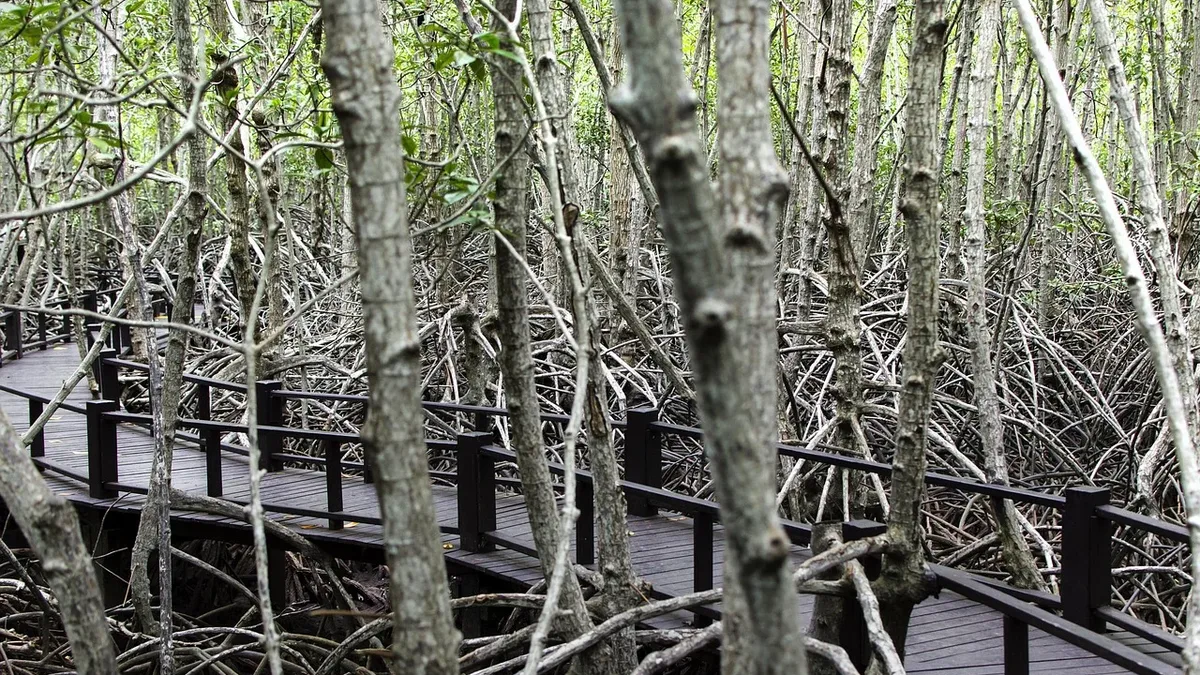
Global mangrove extent is increasing for the first time in decades, according to the 2026 State of the World’s Mangroves report. This reversal, which began around ten years ago, signals a shift after a long period of decline for the world's approximately 15 million hectares of these coastal ecosystems.
Around 65% of new mangrove growth is occurring in areas where mangroves did not previously exist. These new forests are often establishing on sediments washed downstream from inland deforestation and erosion.
Old-growth mangroves remain under serious threat
Despite the net gains, high rates of loss and degradation persist for mature mangrove forests. Direct clearance for urban development is documented in Guinea, India, Bahrain, and Bali. Aquaculture and illegal cutting threaten mangroves in Senegal, while ill-planned mining severs mangroves from the ocean in Mozambique. Oil pollution impacts Nigeria's mangroves.
Sea level rise alone is rarely the sole cause of loss. It becomes a factor when combined with land subsidence and disruptions to upstream water flows. This continued degradation of old-growth mangroves undermines their critical roles in carbon storage, biodiversity habitat, and coastal flood protection.
Global efforts are advancing but face measurable targets
The report arrives at the halfway point for the Global Mangrove Alliance's 2030 goals. Progress is assessed against three aims: halting human-induced loss, doubling protection, and restoring half of recently lost mangroves. Halting loss targets direct clearance, not net loss. The original mangrove cover must be preserved, as new plantings are not direct replacements.
The protection target includes a minimum of 30% coverage, challenging regions with over 45% protection already to aim for 90%. Restoration success stories are noted from Brazil to Indonesia and Qatar to Tanzania. Yet tracking restoration progress remains difficult. Mark Spalding, a lead scientist, cautioned that "it does not mean the work is over."
Quick-fix mass plantings are rarely effective. Newly established forests will require decades of growth before their ecosystem benefits can match those being lost through ongoing old-growth degradation.
Local action drives progress through national chapters and partnerships
The Global Mangrove Alliance, a coalition of over 100 organizations led by The Nature Conservancy, Conservation International, IUCN, Wetlands International, and WWF, relies on local implementation. It has 17 National Chapters. Over 190 contributors from 30 countries participated in the report.
Community-led restoration is featured from Ghana to the Philippines. The Ecuador chapter promoted more than 45 sustainable use agreements and helped consolidate over 100,000 hectares under community stewardship. Guinea Bissau developed a public data platform for monitoring and decision-making. In the Philippines, which has lost two-thirds of its mangroves in the past century, partnerships are seen as key to recovery.
These efforts support vital ecosystem services. Coastal wetlands, including mangroves, reduce flooding for nearly half a million people annually, preventing roughly $2 billion in damages each year. Monitoring this change relies on tools like Global Mangrove Watch v4.1, the leading global mapping platform. Restoration takes time. New mangrove forests will need decades before their benefits outweigh losses from old-growth degradation.