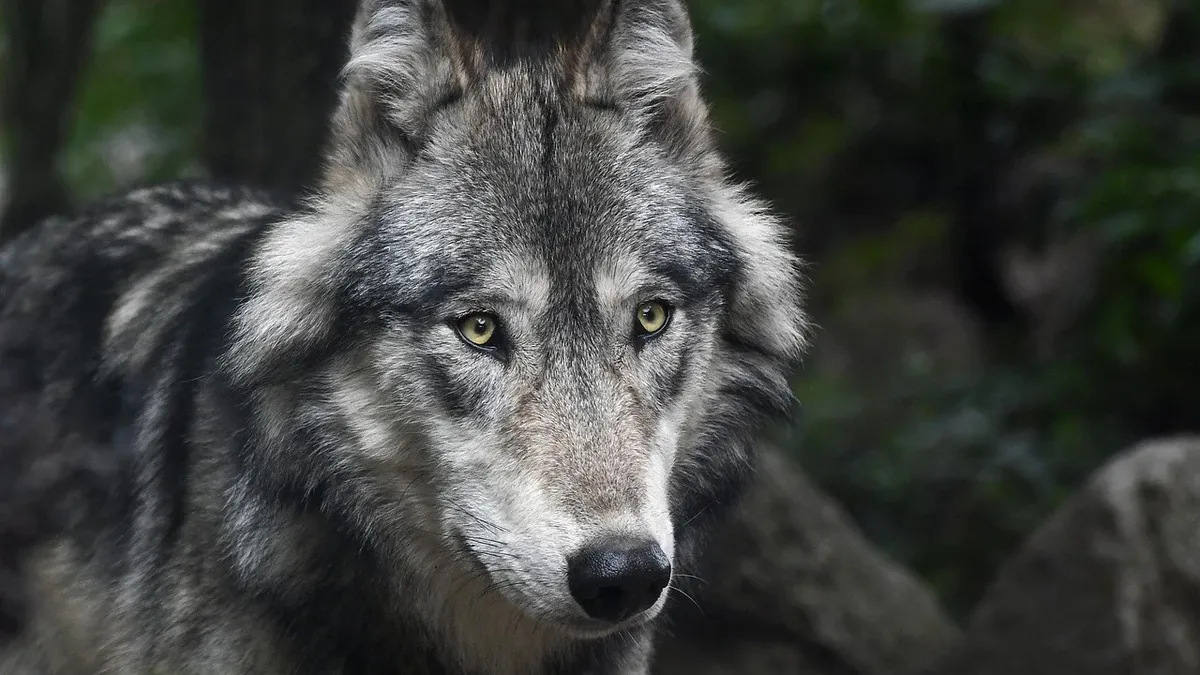
Grey Wolf
What it is
The grey wolf (Canis lupus) is a large, social carnivore found in various habitats across the Northern Hemisphere. It is known for its distinctive grey and white fur, though its coat can range from almost black to nearly white, depending on the environment. Grey wolves are apex predators, playing a crucial role in maintaining the balance of their ecosystems. They are highly intelligent and have complex social structures, often living in packs led by a dominant breeding pair.
Where it is
Grey wolves are distributed across a wide range of habitats, including forests, tundra, mountains, and grasslands. They are found in North America, Europe, and Asia, with populations in countries such as Canada, Russia, and the United States. In North America, they are primarily found in Alaska, parts of Canada, and some western states. In Europe, they are more common in the northern regions, such as Scandinavia and Russia. In Asia, they can be found from the Arctic to the Himalayas.
Condition
The condition of grey wolf populations varies significantly across their range. Historically, grey wolves were widespread, but extensive hunting and habitat loss have led to significant declines in many areas. Currently, while some populations are recovering, others remain threatened. The IUCN Red List classifies the grey wolf as a species of least concern, but many subspecies are endangered or threatened. Conservation efforts are ongoing, focusing on habitat protection, reducing human-wolf conflicts, and reintroduction programs.
Species it supports
Grey wolves play a vital role in their ecosystems by controlling prey populations, which in turn affects vegetation and other species. By preying on weak, sick, or old individuals, wolves help maintain the health of prey populations. This, in turn, supports a wide range of species, including smaller predators and scavengers. For example, in Yellowstone National Park, the reintroduction of wolves has led to a cascade of ecological effects, including changes in the behavior of elk and beavers, and an increase in vegetation growth.
Threats
Grey wolves face several threats, including habitat loss, human-wolf conflicts, and illegal hunting. Habitat loss due to human development and agriculture continues to fragment wolf territories, making it difficult for them to find adequate prey and avoid human settlements. Human-wolf conflicts often arise when wolves prey on livestock, leading to retaliatory killings. Additionally, illegal hunting and poaching remain significant threats, particularly in areas where wolves are not protected.
Protection and restoration
Efforts to protect and restore grey wolf populations are ongoing. In the United States, the Endangered Species Act provides significant protection, with wolves in Yellowstone and the northern Rockies being a notable success story. In Europe, the European Union has established the Natura 2000 network to protect critical habitats. However, protection varies widely across regions, with some areas lacking adequate legal protections. Restoration efforts include habitat restoration, reintroduction programs, and community engagement to reduce human-wolf conflicts.
News
Recent news highlights the ongoing challenges and successes in grey wolf conservation. For instance, in 2021, the U.S. Fish and Wildlife Service proposed removing the grey wolf from the Endangered Species Act, sparking debate over the species' future protection. In Europe, conservationists have reported successful wolf populations in areas like the Carpathian Mountains, where wolves have been thriving despite human presence. Additionally, studies continue to explore the ecological impacts of wolf reintroduction, providing valuable insights into ecosystem health and biodiversity.