Climate change and El Niño amplify Indonesia's 2026 fire crisis
Record-breaking wildfires in Indonesia during 2026, burning nearly 3 million hectares, were driven by a potent combination of human-caused climate change and a strong El Niño, scientists confirm. The fires caused severe regional haze and hundreds of thousands of respiratory illnesses.
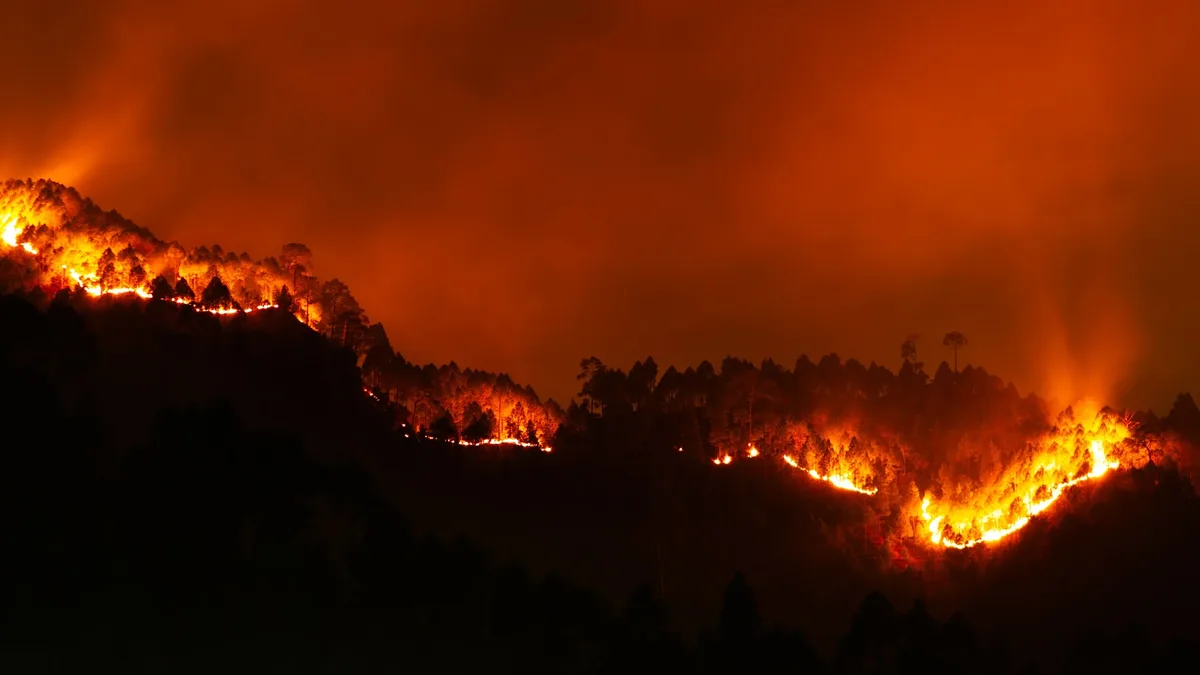
Climate change and El Niño combined to make severe fire conditions in Indonesia about three times more likely in 2026. The fires have burned 2.88 million hectares so far this year, a scale that may surpass the previous record set in 2015.
Global heating from fossil fuels raised temperatures by 1.6°C during the three-month peak fire period. El Niño added another 0.3°C of warming and roughly halved the rainfall. This climate pattern, which shifts rainfall away from the archipelago, coincided with the traditional dry season from June to October. Scientists state this year's record-breaking heat would have been virtually impossible without climate change.
Human-induced warming made drier atmospheric conditions about three times more likely. El Niño alone made such dry spells five times more likely to occur. Climate change also dampened the region's overall rainfall by about 15%. The rainy season was delayed by 20 to 30 days.
Massive fire scale and regional impact
Almost 3 million hectares, an area about 19 times the size of Greater London, burned across Indonesia. Smoke and thick haze spread to Singapore, Malaysia, and the Philippines.
In October, parts of Kalimantan were turned an apocalyptic orange. The crisis forced school closures in Malaysia and disrupted flights. Hospitals in Singapore reported a 20% increase in emergency department visits for conditions potentially linked to the haze.
Health and emergency response challenges
The public health impact has been severe. Indonesia's health ministry links at least 400,000 respiratory infections to the wildfire smoke, including 180,000 cases among children. The scale of illness overwhelmed healthcare systems in affected regions.
Root causes and scientific warnings
The root cause of the intense haze was the burning of drained peatlands. Decades of logging, agroforestry expansion, and peatland drainage have dramatically increased fire vulnerability in these carbon-rich landscapes.
A survey by Greenpeace recorded more than 17,800 haze-source points across 23 Indonesian districts between August and October. The majority were linked to industrial concessions.
| Concession Type | Number of Haze-Source Points Detected |
|---|---|
| Oil Palm | 2,270 within 264 concessions |
| Pulpwood | 2,938 within 143 concessions |
Researchers are calling for urgent peatland restoration, higher water tables, and reduced deforestation. They warn that proactive land-management practices are essential. "El Niño turned off the taps, but fossil fuel emissions turned up the heat," said Prof Friederike Otto of the World Weather Attribution group, which published its analysis on November 13.
El Niño conditions are highly predictable, offering a window for pre-emptive action. The 2015 fire season emitted 333 million tonnes of carbon, and predicted emissions for 2027 remain unusually high. In Jakarta, protesters urged the government to declare the fires a national emergency. Continued monitoring of climate patterns and the implementation of peatland restoration measures are now critical.