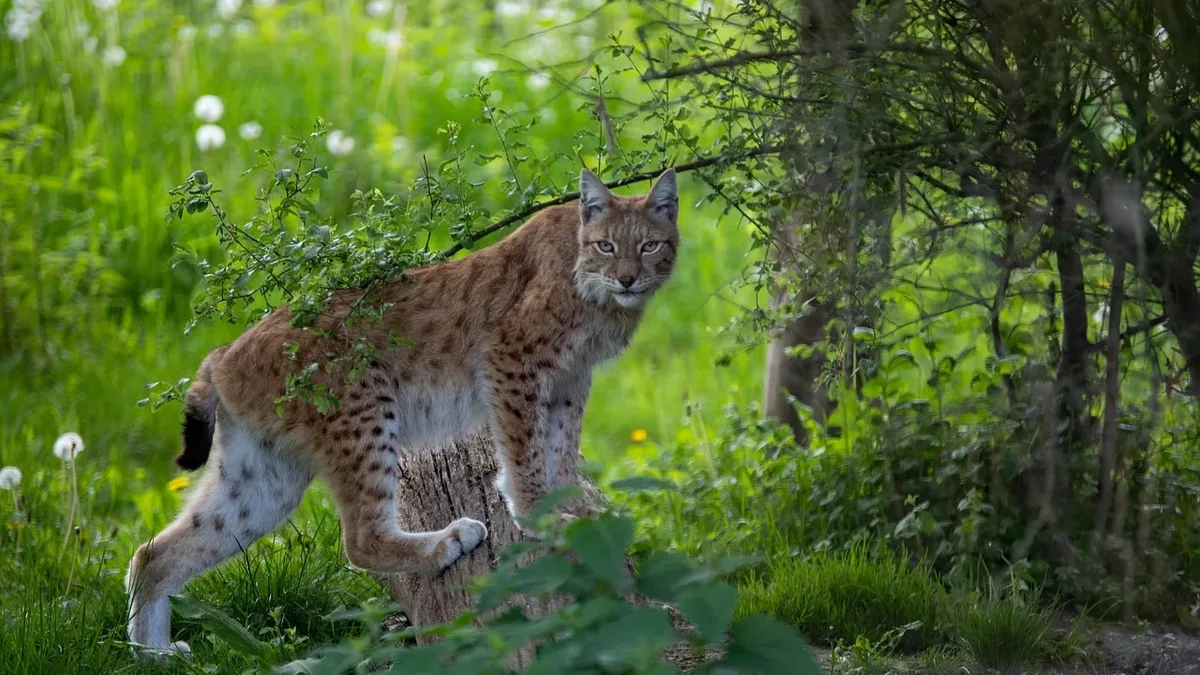
Eurasian Lynx
What it is
The Eurasian Lynx (Lynx lynx) is a medium-sized wild cat native to Europe and parts of Asia. It is the largest felid in Europe and plays a crucial role in maintaining the balance of its ecosystem. The lynx has a distinctive coat with a pattern of black spots and a lighter underside, and its ears have black tufts. Its large paws act as snowshoes, aiding it in hunting in snowy regions. The lynx is known for its keen senses, particularly its hearing and vision, which help it to locate prey effectively.
Where it is
The Eurasian Lynx is found across a wide range of habitats, including forests, mountains, and tundra. It is distributed across much of Europe, including countries such as Norway, Sweden, Finland, and Russia, as well as parts of Central and Eastern Europe. In recent years, efforts have been made to reintroduce the lynx to areas where it has been absent for decades, such as the Czech Republic and Slovakia. The lynx can also be found in protected areas like national parks and wildlife reserves, where it is often observed by researchers and nature enthusiasts.
Condition
The condition of the Eurasian Lynx population varies across its range. In some areas, such as Scandinavia and Russia, the lynx population is relatively stable and even increasing. However, in other regions, particularly in Central and Western Europe, the lynx faces significant challenges, including habitat loss, fragmentation, and human-wildlife conflict. The lynx's population is also affected by the availability of prey, which can fluctuate due to changes in the ecosystem. Conservation efforts are ongoing to address these issues and ensure the long-term survival of the species.
Species it supports
The Eurasian Lynx plays a vital role in its ecosystem by controlling the populations of its prey, such as roe deer, red deer, and hares. By preying on these species, the lynx helps to maintain a balance in the ecosystem, preventing overgrazing and the depletion of vegetation. Additionally, the lynx's presence can influence the behavior of its prey, leading to changes in their distribution and feeding patterns. This, in turn, can affect other species in the ecosystem, creating a complex web of interactions that are essential for the health and stability of the environment.
Threats
The Eurasian Lynx faces several threats, including habitat loss and fragmentation, which reduce the availability of suitable territories and prey. Human-wildlife conflict is another significant issue, as the lynx may prey on livestock, leading to conflicts with local communities. Additionally, poaching and illegal hunting pose a threat, particularly in areas where the lynx is not well protected. Climate change can also impact the lynx's habitat and prey availability, further threatening the species. Conservation efforts focus on addressing these threats through habitat restoration, anti-poaching measures, and community engagement.
Protection and restoration
Efforts to protect and restore the Eurasian Lynx population are ongoing and involve multiple stakeholders, including governments, conservation organizations, and local communities. Protected areas, such as national parks and wildlife reserves, play a crucial role in providing safe habitats for the lynx. Reintroduction programs have been successful in some regions, such as the Czech Republic and Slovakia, where the lynx was reintroduced after a long absence. These programs involve careful planning and monitoring to ensure the success of the reintroduction. Additionally, community-based conservation initiatives aim to reduce human-wildlife conflict by promoting coexistence and providing compensation for livestock losses.
News
Recent news highlights the ongoing efforts to protect the Eurasian Lynx. In Finland, a study has shown that the lynx population is growing, thanks to successful conservation measures. In Sweden, a new initiative aims to reduce human-wildlife conflict by installing wildlife crossings on roads to help lynx and other wildlife safely cross highways. In Russia, a conservation project has successfully reintroduced lynx to a region where they had been absent for decades. These efforts demonstrate the commitment to preserving the Eurasian Lynx and its role in the ecosystem.