Seafloor integrity vital for Earth's carbon
A new scientific report warns that human activities like bottom trawling and deep-sea mining are damaging the seafloor, threatening its key role in storing
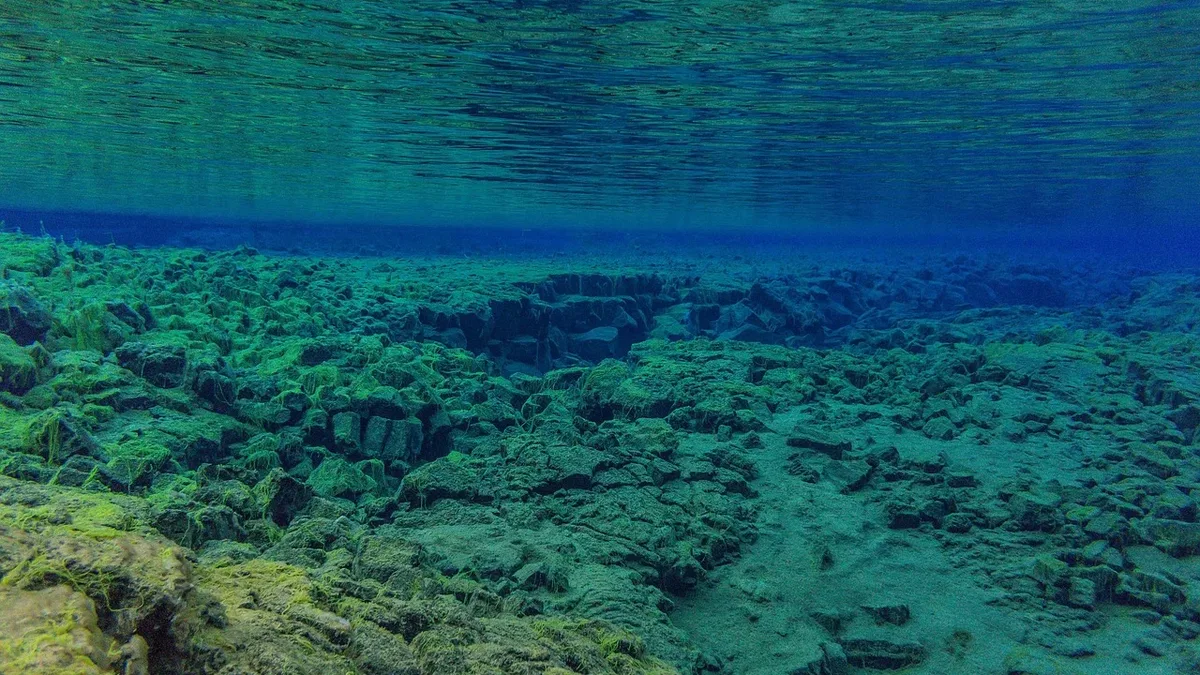
Bottom trawling now disturbs up to 2% of the global seafloor annually, reaching depths of around 4,000 meters. A single manganese nodule mining operation could directly affect more than 200 square kilometers of seabed, according to a new chapter in the Planetary Health Check (PHC) 2026 report.
The seafloor is far more than an inert bottom. It is a living system. Reefs, sponge beds, mussel beds, and burrowing organisms form habitats. They also regulate the exchange of carbon and nutrients between sediment and water. Jacob Geersen, a marine geoscientist at the Leibniz Institute for Baltic Sea Research Warnemünde and lead author of the report, states that we must understand it as an integral part of the Earth system.
"When we plow up sediments or fundamentally alter marine ecosystems, it is not just a matter of a local seafloor disruption," Geersen explains. "Rather, we may be interfering with processes that store carbon, recycle nutrients and stabilize entire marine food webs."
The seafloor's role in the carbon cycle
Hundreds of billions of tonnes of organic carbon are stored in the sedimentary layers of continental shelves. This represents the majority of long-term carbon sequestration in marine sediments. Disturbing these sediments risks releasing that stored carbon as carbon dioxide.
Global modeling suggests bottom trawling alone could free over 100 million tonnes of carbon from sediments each year. There is significant uncertainty about how much of this ultimately reaches the atmosphere as additional CO₂. Levke Caesar, a climate researcher at the Potsdam Institute for Climate Impact Research, emphasizes the report's urgent message.
The PHC 2026 urgently highlights, among other things, that natural carbon sinks are coming under increasing pressure, Caesar comments. With regard to this, we must not limit our focus to forests and soils on land.
The importance of the seafloor extends beyond carbon storage. Organisms living on and in the seabed influence food webs. Together with microorganisms and sediment chemistry, they regulate the exchange of nitrogen, phosphorus, and carbon. Destroying these systems alters matter cycles and ecosystem functions. Consequences in the deep sea are poorly understood but can persist for decades, as shown by deep-sea mining experiments.
The Baltic Sea as a warning
The report uses the Baltic Sea to illustrate the profound loss of seafloor integrity. Decades to centuries of human interference are compounded by warming, acidification, eutrophication, and oxygen depletion. The authors conclude that not a single square meter of the Baltic seafloor remains in a pristine state free from human alteration.
Many of these changes are long-term and, in some cases, irreversible. The Baltic Sea can therefore provide a window into the future of other marine regions if human pressure on the seafloor continues to increase, Geersen said.
Legal frameworks and protection challenges
Protecting the seafloor poses a significant legal challenge. Fisheries, shipping, mining, and biodiversity are often governed by separate regulatory frameworks, even though their impacts overlap. The UN Agreement on the Conservation of Marine Biodiversity Beyond National Jurisdiction (BBNJ Agreement) entered into force in January 2026. It provides for establishing marine protected areas and strengthens environmental impact assessment requirements.
However, the International Seabed Authority remains responsible for regulating mineral resource extraction in areas beyond national jurisdiction. Nele Matz-Lück, co-director of the Walther Schücking Institute for International Law, points to a key step.
The researchers recommend that marine spatial planning must account for functions like carbon sequestration, not only species and habitats. They call for protecting deep-sea ecosystems and carbon-rich sediments from intensive human interference. A better understanding of which activities shape the seafloor, and how intensely, is also needed.
The new chapter examines the seafloor from an Earth system perspective, spotlighting a component that has received relatively little attention. Seafloor integrity describes the preservation of its physical structure, biotic communities, and chemical functions. It is not yet recognized as an additional planetary boundary.