Cities can restore buried streams
A study compares how Seoul and Zürich restore buried streams to manage stormwater and habitats, using large-scale and incremental methods.
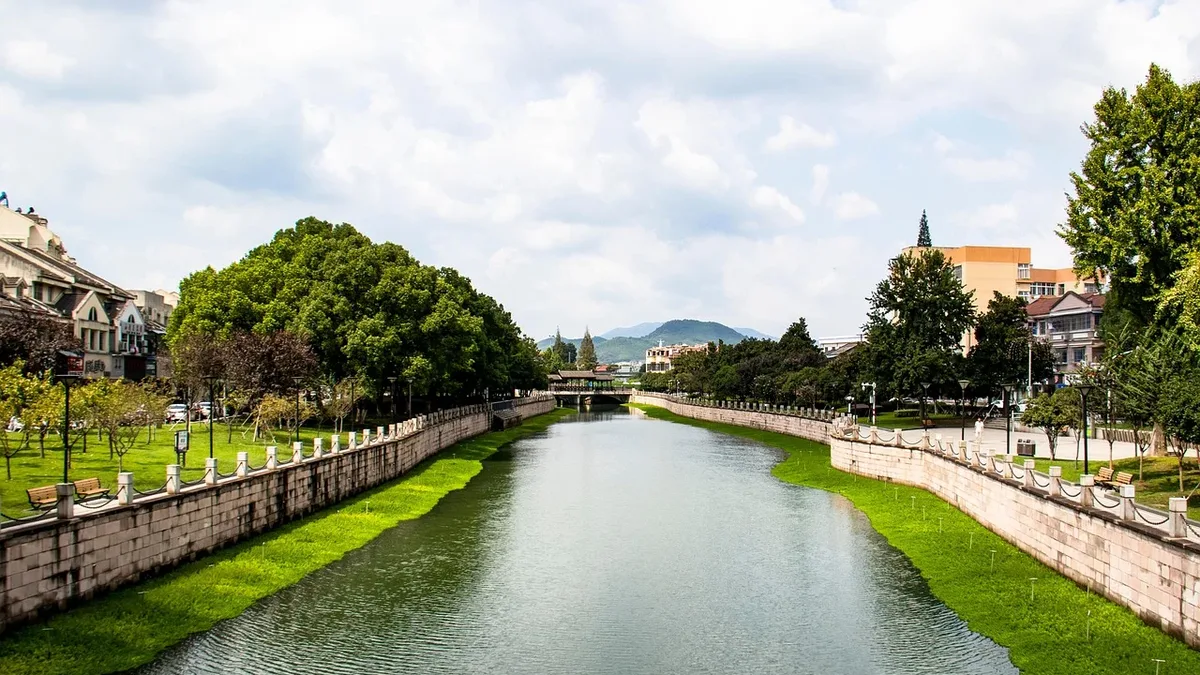
Cities can restore streams they once buried underground, a practice called stream daylighting. According to research by Luna Khirfan published by The Conversation on August 28, 2026, this can help manage stormwater, restore habitats, and create public green spaces. The process faces challenges like finding sites, securing funding, and ensuring benefits reach existing residents without causing displacement.
Khirfan's study compares two contrasting approaches to stream daylighting in Seoul, South Korea, and Zürich, Switzerland. The findings suggest municipalities need flexible programs that can apply lessons from one project to the next.
Two cities, two approaches
Seoul restored the Cheonggyecheon stream in a rapid, centralized project between 2003 and 2005. The city removed an elevated highway and integrated the stream with new public transit, cycling paths, and walkways. This large flagship project required substantial capital investment and continues to incur high maintenance costs. Critics have questioned its ecological integrity because pumps supply water to the channel. Redevelopment around the corridor also increased land values and displaced some smaller businesses.
Zürich took a different, incremental approach. Beginning with pilot projects in the 1980s, the city restored numerous smaller stream segments over several decades through its Bachkonzept, or stream concept. These projects were linked to sewer management, infrastructure renewal, and neighborhood planning. Daylighted streams now pass through residential areas, parks, and public spaces, accompanied by paths and seating. Together, they form a distributed network that improves watershed function and gives neighborhoods greater access to water.
Find opportunities before they disappear
The first step for municipalities is mapping, not construction. They should combine culvert inventories and historical watercourse maps with data on flood risks, social vulnerability, public land, and planned infrastructure projects. This helps identify sites for technical study before other land-use decisions make daylighting impossible.
Toronto recognizes historical watercourses and supports their restoration. However, research on flood risks in the city identifies neighborhoods like Black Creek and Flemingdon Park where flood exposure intersects with social vulnerability. Combining this evidence with lost-stream mapping could help identify equitable pilot opportunities.
Choose the right delivery pathway
Stream daylighting generally enters municipal practice through one of two routes. The first is public capital works like culvert replacement, road reconstruction, or park renewal, especially on public land. The second route is private redevelopment on large industrial, commercial, or brownfield sites. Timing is critical, as restoring a waterway becomes much more difficult once buildings and roads are set.
Vancouver's Still Creek shows how municipal investment, redevelopment opportunities, and community stewardship can support gradual restoration. Over more than two decades, the city and its partners have delivered site-specific projects involving habitat restoration and public access, including a developer-funded daylighting project completed in 2009.
Build a program that learns
A daylighting project doesn't end with construction. Municipalities should follow an adaptive cycle: map, assess, co-design, implement, monitor, learn, adjust, and scale. Monitoring should cover flood performance, water quality, habitat, public use, and equity. The findings should then be used to manage completed sites and improve future projects. Equity requires sustained attention to prevent new public spaces from increasing development pressure and displacing residents.