EU Sets 3°C Warming Baseline in New Climate Resilience Law
The European Commission has proposed a Climate Resilience Law requiring member states to plan for 1.5°C of warming by 2030, 2°C by 2050, and 3°C by 2100. The framework aims to simplify national adaptation strategies amid estimated annual climate damages of €50 billion and a need for €70 billion in yearly adaptation investment.
The European Commission has proposed a Climate Resilience Law to establish a common warming trajectory and simplify national climate risk planning. The law sets a reference trajectory for global warming, requiring member states to plan against 1.5°C by 2030, 2°C by 2050, and 3°C by 2100. This is a planning assumption, not a new emissions target. The proposal is part of a wider framework to strengthen preparations for heatwaves, droughts, wildfires and floods.
Countries would fulfil obligations through one consolidated national strategic plan, aiming for consistency without a one-size-fits-all model. The framework requires governments to clarify which authorities manage climate risks in key policy areas, from infrastructure to essential services. National adaptation planning already exists under previous EU laws, but this new proposal adds a common warming baseline and clearer arrangements.
Massive Investment Required
Adapting Europe’s infrastructure and economy to future climate conditions is expected to require around €70 billion in investment annually. This need far exceeds current loss estimates. The Commission calculated that climate-related economic losses between 2022 and 2025 totalled about €200 billion, equivalent to €50 billion a year.
Investment in adaptation could generate returns of more than ten times its value through avoided losses. The global market for climate adaptation solutions is projected to reach €3.5 trillion by 2050, around four times its current size. The new package does not establish a dedicated new adaptation fund, instead pointing to existing EU programmes and private investment.
Digital Tools for Implementation
Three new digital tools will support the implementation of the resilience framework. These are designed to provide authorities with precise, localized data and solutions.
The European Climate Viewer will also add supercomputing capacity through the Destination Earth initiative.
Urgency Amid Accelerating Warming
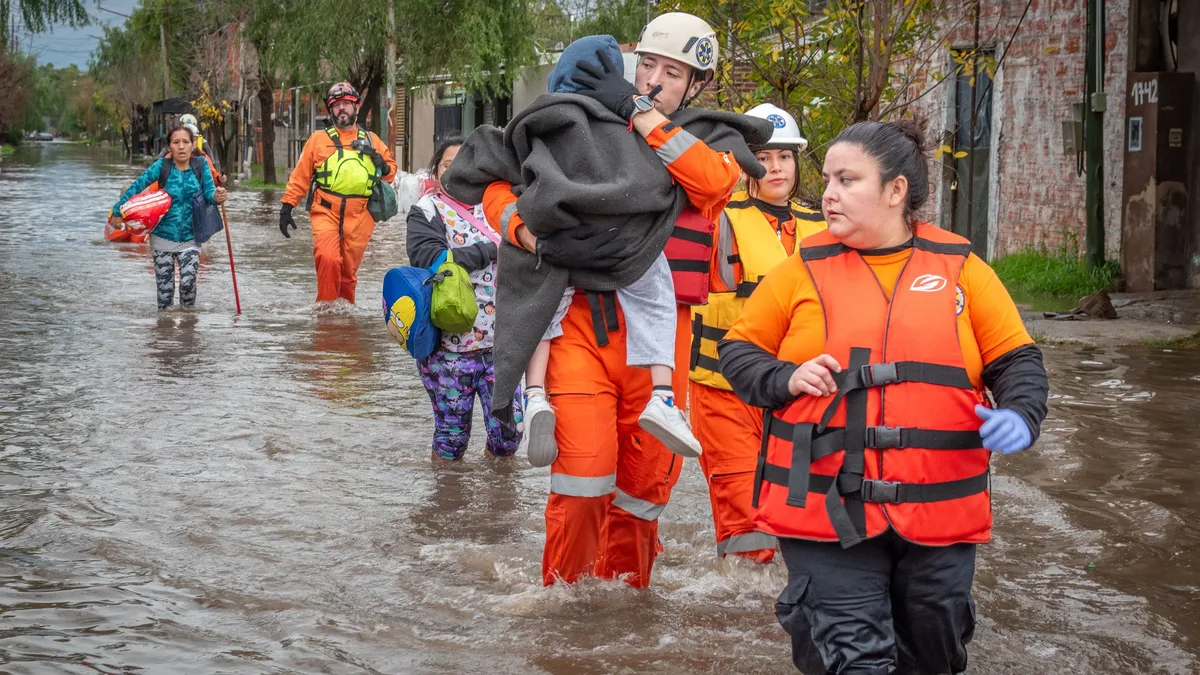
The Commission warns that climate risks are worsening. Europe is warming at double the global rate. The framework is explicitly linked to recent extreme events, including this summer’s heatwaves and droughts that drove rivers to historically low levels and contributed to dangerous wildfires. Severe flooding has also caused extensive damage in recent years.
Around 75% of Europeans live in cities and urban areas, leaving large populations exposed to risks affecting housing, transport, water supplies and public health. Ursula von der Leyen said: "Europe is warming at double the global rate. To become truly climate resilient, we need to adjust and learn."
Alongside the law, the Commission plans to establish a PreparEU Advisory Group on disaster preparedness and identify the 100 European territories most vulnerable to climate change. Implementation will begin immediately with a European Heatwave Plan, a Climate Insurance Alliance, and a European Water initiative. The Commission will present a detailed implementation plan within six months of the law’s adoption. A separate EU strategic plan on climate resilience is due to be proposed in 2028.