Bats Originated in Europe 65 Million Years Ago
A landmark genomic and fossil study confirms bats first evolved in Europe, overturning previous theories. The research, the largest of its kind, maps their global dispersal and provides a new framework for studying their unique disease resistance and longevity.
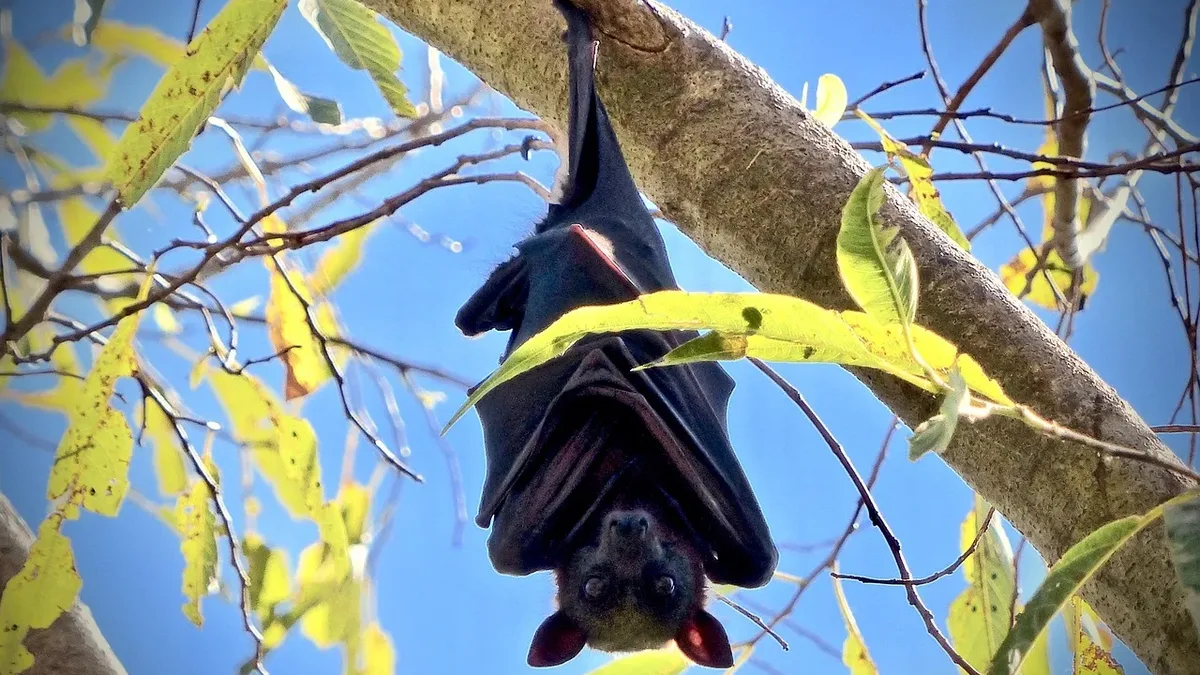
Bats likely originated in Europe about 65 million years ago, according to a landmark study published in Nature. This finding overturns previous hypotheses that proposed an Asian, African, or North American origin for these flying mammals.
The research, representing Phase 1 of the global Bat1K consortium, reconstructed evolutionary history using 103 modern bat genomes and 44 fossil specimens. It is the largest combined bat genome and fossil study ever undertaken. The work resolved long-running debates about how major bat groups are related and provides the first robust evolutionary framework to investigate the genes behind bats' unique traits.
Global Dispersal and Diversity
From that European starting point, the earliest ancestors of modern bats dispersed into Africa, establishing a Europe-Africa hub. They then rapidly expanded across the globe to Asia, the Americas, and Australia. Today, bats account for one fifth of all living mammal species, making them the second most diverse mammal group. There are more than 1,500 bat species distributed worldwide.
Despite this diversity, many populations are fragile. About half of known bat species have unknown or decreasing populations. The International Union for the Conservation of Nature considers 18% of bat species threatened. Bats play vital roles in ecosystems by pollinating plants, dispersing seeds, and consuming insect pests. Yet all but one species have very small litters of just one or two pups, meaning populations cannot quickly recover from losses caused by scorching temperatures, persecution, or harvesting.
Evolutionary Innovations
The study confirms that echolocation evolved near the dawn of bat evolution, alongside powered flight. Fossil evidence from an ancient bat named Vielasia, placed within the oldest branch of the bat family tree, indicates echolocation predates the diversification of modern bats. For the first time, researchers have reconstructed the genome of the common bat ancestor, showing what the first mammal capable of flight looked like genetically.
This genomic resource has significant potential for human health research. Bats are reservoirs of zoonotic viruses like Ebola, Nipah, and Marburg but typically do not get sick. They also live exceptionally long for their size and show few signs of ageing or cancers. Sarah Olson, a study author and director of health research at the Wildlife Conservation Society, said the findings lay the groundwork for understanding bat physiology and disease resistance. Evolutionary biologist Ariadna Morales noted that viral tolerance and disease resistance adaptations likely evolved at the same time as all bats.
Conservation Challenges
Bats face mounting threats from the climate crisis, habitat loss, persecution, and harvesting. In North America, millions of bats have perished from white nose syndrome, a fungal pathogen that grows on the skin of hibernating bats. The study's authors hope the new genetic insights can help. Olson suggested the research may help understand why myotis bat species are more susceptible to such fungal diseases.
Future Research Directions
The Bat1K consortium, an international initiative launched in 2017, aims to sequence the genomes of all 1,500 living bat species. This study, conducted by 137 researchers from 64 countries and covering all 21 recognized bat families, is its first major output. The high-quality genomic resource it provides will enable new studies on bat longevity, disease resistance, and evolutionary adaptations. Sarah Olson expressed enthusiasm for the discovery, saying, "Bats, on a scale of amazing to amazing, they’re super amazing." Building the dataset required samples collected over decades from some of the rarest and most unusual bat families in remote locations worldwide.