UK communities reject resilience messaging, demand flood defenses
Residents in flood-prone areas of north-west England are rejecting official resilience language, viewing it as a way to shift responsibility from institutions to citizens. They are demanding tangible investment in physical flood defenses instead of being told to adapt individually to rising climate risks.
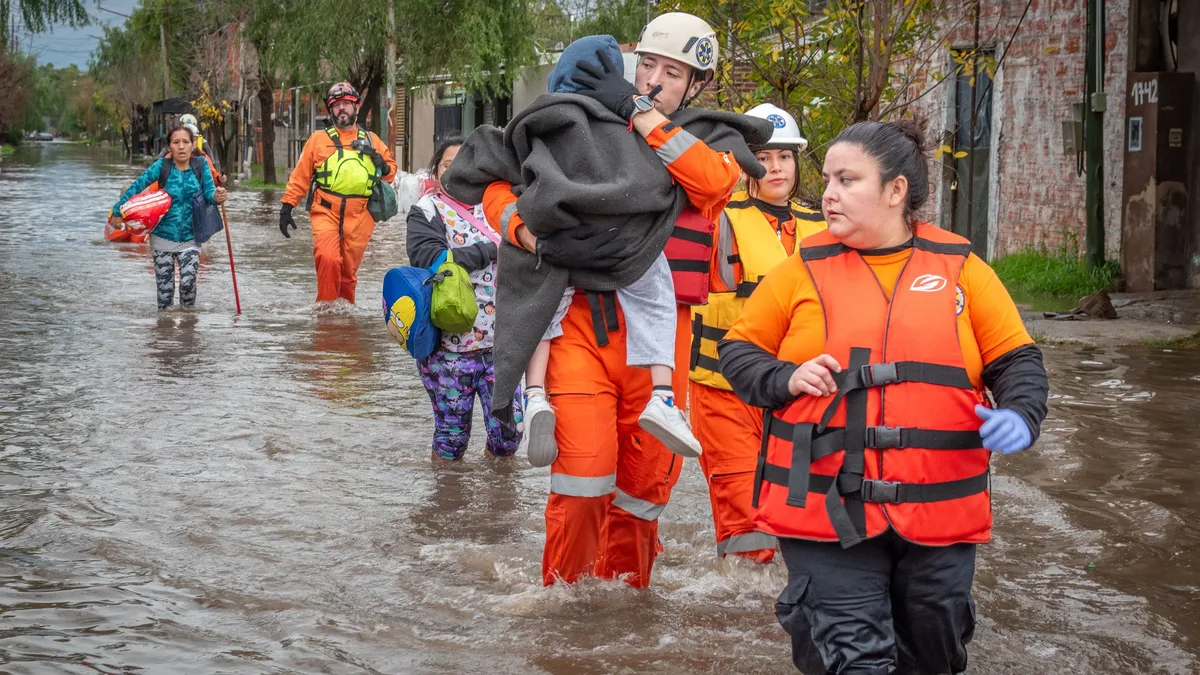
Communities across north-west England are rejecting official resilience messaging as false hope and demanding physical flood defenses. Residents object to language that implies they should adapt to repeated flooding and recover independently, viewing it as a transfer of responsibility from institutions to citizens.
Many see property-level resilience measures, like flood barriers, as mere Band-Aids rather than solutions to the underlying causes of flood risk. Their primary objection arises when the concept of resilience appears to substitute for direct investment, robust protection, and clear institutional accountability. While resilience can be a positive concept suggesting adaptation, in this context it rings hollow. Residents are not rejecting the need for adaptation but are questioning approaches that ask them to 'live with water' while feeling abandoned to deal with the consequences alone. This sentiment emerges as flood risk rises across the UK due to climate change, leading to more frequent and intense floods.
Collaborative resilience requires institutional partnership
Communities are more likely to embrace resilience when it is a collaborative effort co-created with local authorities, agencies, and community organisations. Without this partnership, resilience agendas are seen as politically contested, with residents questioning authority and demanding accountability. Calls for community resilience are often interpreted as additional expectations placed on people after years of pressure on public services and budgets. Adaptation is essential, but residents insist resilience must not become a substitute for public investment.
Residents demand tangible flood defenses over individual adaptation
Flood action group leaders confirm that residents want to see physical infrastructure built, not only individual adaptation measures. The clear demand is for investment in flood defenses, succinctly described as wanting to see 'spades in the ground'. This research, conducted with three flood action groups over five years through interviews and observation, captures a growing frustration. Paul O'Hare, reflecting on the resilience narrative, said: "Resilience offers hope. But for me it's false hope. A way of telling people, you'll flood."
Flood management has historically relied on engineered defences but now increasingly promotes 'living with water' through warnings, insurance, and property-level plans. As climate risks escalate, residents continue to demand those spades in the ground for physical defenses, questioning who should reasonably bear the responsibility for managing the consequences of climate change.