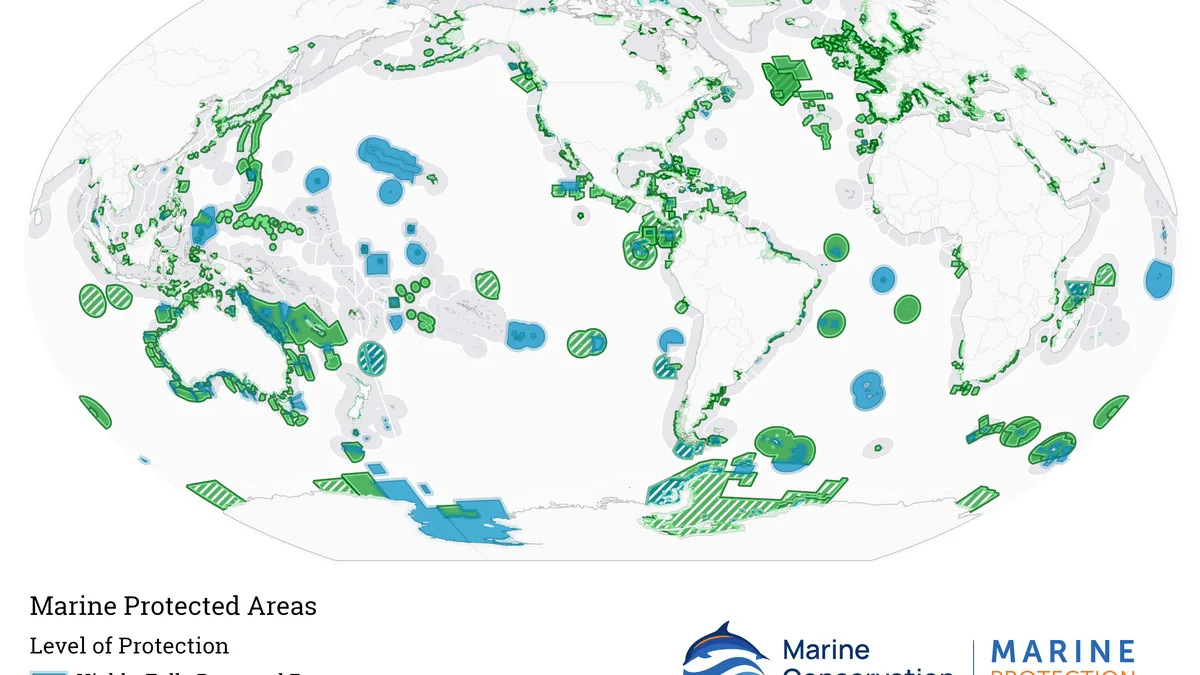
Marine Protected Areas
| Name | Marine Protected Area (MPA) |
|---|---|
| Original use | Conservation of marine ecosystems and biodiversity |
| IUCN Category | I-VI (varies by protection level) |
| Typical size | Less than 1 km² to over 1 million km² (varies) |
| Primary legal basis | National legislation or international agreement |
| Key permitted activities | Varies from 'no-take' to regulated fishing and tourism |
| Typical management authority | Government agency or delegated body |
Origin and history
The formal concept of Marine Protected Areas (MPAs) as legally designated zones for ocean conservation has its roots in the late 19th and early 20th centuries. Early precedents include the establishment of protected forest reserves that extended to coastal waters in some regions. The modern framework for MPAs began to coalesce internationally in the 1960s and 1970s, driven by growing scientific awareness of marine degradation. Key early examples include the creation of the Great Barrier Reef Marine Park in Australia, which was established through legislation in the 1970s. The United States also contributed significantly with the designation of the Marine Protection, Research, and Sanctuaries Act in 1972, which led to the National Marine Sanctuary system. The concept has since been adopted and adapted by nations globally, becoming a cornerstone of international marine policy.
What it is for
Marine Protected Areas are designated primarily to conserve marine biodiversity and protect vulnerable habitats from destructive human activities. They serve to safeguard breeding and nursery grounds for commercially important fish species, thereby supporting adjacent fisheries through spillover effects. MPAs are established to preserve unique geological features, cultural heritage sites like shipwrecks, and areas of significant scientific interest. They provide a controlled environment for scientific research on marine ecosystems, offering baselines to measure changes in unprotected areas. Furthermore, they aim to maintain or restore the ecological integrity of marine environments, including kelp forests, coral reefs, seagrass beds, and deep-sea vents. Ultimately, their purpose extends to ensuring the long-term provision of ecosystem services, such as coastal protection, carbon sequestration, and tourism opportunities.
Overview
A Marine Protected Area is a geographically defined zone of the ocean where human activity is regulated by law to achieve specific conservation objectives. The level of protection within an MPA can vary widely, ranging from fully protected "no-take" reserves to multiple-use areas that permit certain activities like sustainable fishing or tourism. MPAs are established under national or international legislation, with their management typically involving government agencies, scientific bodies, and sometimes local communities. They are not uniform; their size, location, and regulations are tailored to local ecological, social, and economic contexts. The global network of MPAs covers a significant portion of the world's coastal waters and an increasing area of the high seas. Effective MPAs require ongoing monitoring, enforcement, and adaptive management to ensure their conservation goals are met.
What to know
It is critical to understand that the term "Marine Protected Area" encompasses a vast spectrum of management regimes, and the name alone does not indicate the level of protection. The effectiveness of an MPA is heavily dependent on adequate funding for surveillance and enforcement, as poorly enforced "paper parks" offer little ecological benefit. Many MPAs are designed as interconnected networks to account for species migration and larval dispersal, rather than as isolated units. The establishment process often involves significant stakeholder consultation and can be contentious, balancing conservation aims with existing economic interests like fishing, shipping, or mining. Scientific monitoring programs are essential for assessing an MPA's impact on biomass, biodiversity, and ecosystem resilience. Finally, climate change presents a fundamental challenge, as warming waters and ocean acidification can undermine the protective benefits of an MPA, necessitating integrated management approaches.
Common questions
A common question is whether fishing is completely banned in all MPAs, and the answer is that only a subset, often called marine reserves or no-take zones, prohibit all extractive activities. People frequently ask if MPAs benefit local fisheries, and research indicates that well-designed and enforced no-take zones can increase fish catches in surrounding areas over time through adult migration and larval export. Many inquire about who decides where an MPA is placed, which is typically a government process informed by scientific data on biodiversity hotspots, threatened species habitats, and ecological connectivity. A recurring question concerns the difference between an MPA and a marine sanctuary or park, which are often just different legal names for similar types of protected areas depending on the country. People also ask if MPAs are only near coastlines, but they can also be designated in the open ocean, including around seamounts and in international waters. Finally, there is often confusion about how to know what is allowed in a specific MPA, which requires consulting the official management plan and regulations issued by the governing authority.
Pros and cons
A significant pro of well-managed MPAs is their proven ability to increase the biomass, size, and diversity of species within their boundaries, creating reservoirs for depleted populations. They provide crucial reference sites for scientific research, allowing for the study of relatively undisturbed marine ecosystems. Conversely, a major con is the potential for "paper parks," where designations are made for political expediency without allocating resources for enforcement, rendering them ineffective. The establishment process can lead to social inequity, where local communities, especially small-scale fishers, bear the immediate cost of access restrictions without adequate compensation or alternative livelihoods. A common mistake in MPA design is creating small, isolated reserves that are ecologically disconnected, limiting benefits for wide-ranging species. Furthermore, MPAs can create displacement, where fishing effort is simply shifted to other, potentially more vulnerable areas, leading to a net negative impact if not managed as part of a broader strategy.
Who it suits
Marine Protected Areas as a conservation tool suit nations or regions with the institutional capacity and political will to commit to long-term management, monitoring, and enforcement. They are particularly suited for protecting specific, bounded critical habitats such as coral reefs, seagrass meadows, or spawning aggregation sites. The MPA approach suits scenarios where there is strong scientific data to inform the boundaries and regulations, ensuring the protection aligns with ecological needs. It suits management contexts where stakeholder engagement is possible and where benefits, such as increased tourism or fishery spillover, can be clearly communicated and realized. Conversely, MPAs are less suited as a sole solution for highly migratory pelagic species, which require international agreements beyond fixed geographic zones. They are also poorly suited for areas with intense, unresolved conflicts over resource use unless accompanied by a robust and equitable process for addressing those conflicts.
Latest Marine Protected Areas news
Latest reporting
High Seas Treaty Surpasses 100 Parties, COP1 Set for 2027
The High Seas Treaty has entered force with over 100 parties, setting the stage for the first Conference of the Parties in January 2027 to establish...
National Academies report flags marine
A new digital report from the National Academies of Sciences, Engineering, and Medicine states that marine carbon dioxide removal is advancing but...

Human Activities Outpace Natural Nutrient Sources on Coasts
A new study finds human activities contribute more nitrogen than all natural sources in a quarter of the world's coastal waterways, pinpointing areas...

Traffic noise silences endangered gibbons'
A study in Malaysia finds white-handed gibbons near a highway sing far less often than groups in quieter areas, raising concerns that noise pollution

Extreme Heat Seasons Expand Into Spring and Autumn
A new study finds extreme heat events are spreading into shoulder seasons globally, with over half of land areas seeing earlier or later heatwaves.

ECB's asset purchases linked to fossil fuel
A report from Reclaim Finance accuses the European Central Bank of supporting fossil fuel companies operating in critical biodiversity areas through...