Urban Green Space
| Ecosystem type | Urban green space |
|---|---|
| Condition | Varies from natural remnants to highly managed landscapes |
| Protection regime | Varies by jurisdiction, often municipal bylaws and zoning |
| Primary ecosystem services | Recreation, climate regulation, biodiversity support, stormwater management |
| Typical components | Lawns, trees, shrubs, water features, paved paths |
| Original use | Public amenity and recreation |
| First created | 19th century (as formal municipal parks) |
Origin and history
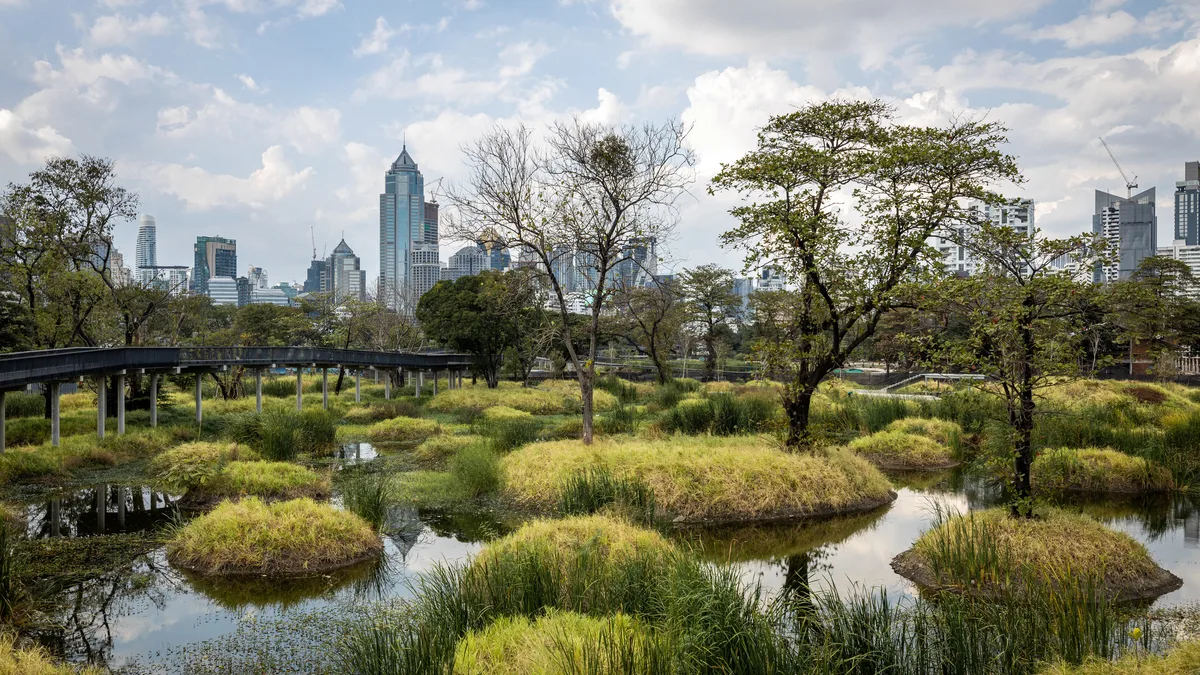
The concept of designated urban green space originates from 19th century Europe and North America, driven by the public health crises of rapid industrialization. The movement was a response to overcrowded, polluted cities with little public access to nature or recreation. Pioneering examples include Birkenhead Park in England, opened in the 1840s, and New York's Central Park, conceived in the 1850s. These were not natural remnants but consciously designed and constructed landscapes intended for public use. The philosophy expanded in the early 20th century with the Garden City movement and later with post-war urban planning incorporating parkways and recreational fields. Its modern form integrates ecological principles, aiming to provide ecosystem services beyond mere recreation.
What it is for
Urban green space serves to provide city residents with access to natural environments and recreational opportunities within the built environment. Its core functions include improving public health by offering venues for physical activity and reducing stress through exposure to nature. It plays a critical role in environmental management by mitigating the urban heat island effect, managing stormwater runoff, and improving local air quality. These spaces support urban biodiversity by offering habitat for various plant, insect, and bird species. Furthermore, they serve as vital social infrastructure, providing settings for community interaction, civic events, and cultural activities. They also contribute to increasing property values and overall urban aesthetic and livability.
Overview
An urban green space is any vegetated land or water feature within a city or town, publicly or privately owned, that is accessible to the public. This broad category encompasses formal parks, playgrounds, sports fields, botanical gardens, greenways, street trees, community gardens, and preserved natural areas like woodlands or wetlands. Its condition is highly variable, ranging from intensively managed lawns and flower beds to semi-natural ecosystems requiring minimal intervention. The protection regime is typically a combination of municipal zoning laws, dedicated parkland statutes, conservation easements, and long-term management plans. Funding for maintenance is a perennial challenge, often leading to disparities in quality between affluent and disadvantaged neighborhoods. Effective management balances recreational use with ecological integrity, which often involves conflict.
What to know
The ecological value of an urban green space depends heavily on its design, plant diversity, and management practices, not merely its presence. A common misconception is that all green spaces are equally beneficial, but a monoculture lawn has far lower biodiversity and ecosystem service value than a native plant meadow. Connectivity between green spaces, via corridors like tree-lined streets or river paths, is crucial for supporting viable wildlife populations. User conflicts are frequent, as dog walkers, cyclists, sports teams, and those seeking quiet contemplation compete for the same finite space. Long-term viability is threatened by development pressure, invasive species, and climate change stressors like drought and extreme heat. Understanding the specific governance and funding model for your local green space is key to advocating for its protection and improvement.
Common questions
What is the difference between a park and an urban green space? A park is a specific type of formal, designated green space, while the term "urban green space" includes all vegetated urban areas, from pocket parks to street verges. Who is responsible for maintaining these spaces? Maintenance is typically split between municipal parks departments, private landowners (for publicly accessible private spaces), and sometimes community volunteer groups. Can urban green spaces really help with climate change? Yes, through carbon sequestration in trees and soil, reducing energy needed for cooling, and replacing impervious surfaces that contribute to flooding. Are community gardens considered urban green space? Yes, they provide green infrastructure, social cohesion, and often habitat, though their primary function may be food production. Why are some neighborhoods lacking in green space? Historic inequities in urban planning and investment often result in fewer and lower-quality green spaces in low-income and minority communities. How can I get involved? Options include joining a friends-of-the-park group, participating in volunteer clean-up or planting days, and engaging with local planning processes.
Pros and cons
The primary advantage of urban green space is its multifunctionality, delivering simultaneous benefits for human health, social welfare, and environmental resilience. It provides a cost-effective public health intervention by encouraging active lifestyles and improving mental well-being. Ecologically, it supports local wildlife and helps cities adapt to climate impacts. A significant con is the high and ongoing maintenance cost, which can lead to neglect and degradation if public funding is insufficient or inequitably distributed. Many cities face a "green gentrification" effect, where improving green space raises property values and displaces the existing community it was meant to serve. Common mistakes include designing spaces that are not truly accessible to all demographics or prioritizing ornamental aesthetics over ecological function and climate resilience. People often regret supporting overly simplistic designs that require excessive water, pesticides, and mowing, failing to deliver promised ecological benefits.
Who it suits
Urban green space suits all urban residents, but its design dictates which groups benefit most. Highly programmed spaces with sports fields and playgrounds suit families with children and recreational athletes. Naturalized, quiet areas with walking paths suit older adults, birdwatchers, and individuals seeking mental restoration. Community gardens suit those interested in local food production and hyper-local social networking. Dense, linear greenways primarily suit commuter cyclists and runners. Dog parks specifically suit pet owners, a group often in conflict with other users. Ultimately, a healthy urban ecosystem requires a diverse portfolio of green space types to suit the varied needs of a heterogeneous urban population, emphasizing that no single design can serve all purposes equally well.
Latest Urban Green Space news
Latest reporting

AI tree species mapping boosts urban climate
Researchers have used AI to identify urban tree species from satellite and aerial imagery, enabling cities to make reforestation choices that improve
Northern Roots Eco-Park Opens in Greater Manchester
A 65-hectare former industrial site in Oldham has been transformed into the UK's largest urban farm and eco-park, featuring a new public facility and...

Wildlife Trusts warn of nature access crisis in England
New analysis reveals 44% of English constituencies have poor access to green or blue space, with the Wildlife Trusts comparing the crisis to...
Green groups file EU complaint over water
A coalition of environmental NGOs has accused the European Commission of maladministration over its plan to revise the Water Framework Directive...
Architects convert car spaces into climate
The European Prize for Urban Public Space shortlist features five projects transforming roads and parking lots into green spaces and cooling areas to...
Green peer refuses Thames Water sewage
Green Party peer Jenny Jones is withholding the sewage portion of her Thames Water bill in protest of the company's pollution record, advocating for