Documentary explores deep-sea life ahead of mining threat
A new film follows scientists racing to document species in the Pacific's Clarion Clipperton Zone, a region targeted for deep-sea mining.
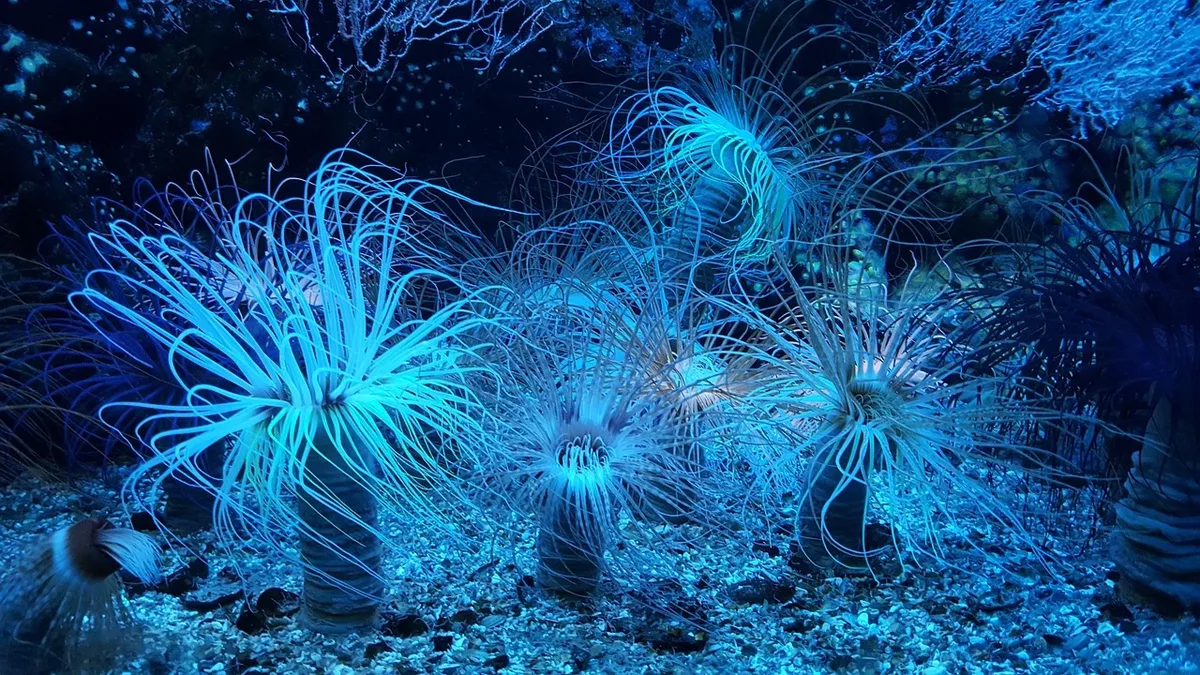
A documentary following scientists on a deep-sea expedition will premiere in UK cinemas next month. The film, How Deep Is Your Love, tracks researchers from London's Natural History Museum as they voyage to a mineral-rich area of the Pacific seabed.
According to director Eleanor Mortimer, the project is an ode to taxonomists who spend countless hours studying microscopic life. She told The Guardian she aims to help audiences connect with a vast, unseen part of the planet. "I want people to fall in love with the deep sea," Mortimer said.
The expedition to the abyss
The research team sailed for 12 days to reach the Clarion Clipperton Zone, located between Hawaii and Mexico. Their underwater robot, named Isis, required five hours to descend 3 miles (5km) to the seafloor, a sunless world marked by mineral-rich nodules. Scientists estimate humans have observed only 0.001% of the deep-sea floor, defined as areas deeper than 500 metres.
The film captures the team's race to identify new species before deep-sea mining operations could begin. It juxtaposes scenes at sea with footage from the International Seabed Authority (ISA) in Jamaica, the body regulating seabed activities beyond national jurisdictions. The ISA concluded its latest negotiations this year without finalizing a mining regulatory framework, citing significant data gaps on environmental thresholds.
Cataloguing strange new life
Working from a ship, the scientists watched screens linked to a camera 5,000 metres below. They expressed delight at encountering bizarre life forms, giving them playful names based on their appearances.
A poignant moment in the film, set to Portishead's Glory Box, highlights an ethical dilemma. To be studied in detail, a specimen must be brought to the surface, a journey it cannot survive. One researcher confessed to wanting a creature "in a jar on my desk," while another admitted dreaming of tucking sea cucumbers into bed.
Mortimer notes that even after identification and DNA collection, it can take up to 14 years to formally name a new species.
Blending worlds to foster empathy
In a final artistic sequence, Mortimer superimposes images of deep-sea animals onto the corridors of the ISA and onto London's streets at night. This visual metaphor brings the remote abyss into human spaces. The director hopes the connections forged by the film might trigger empathy for these fragile ecosystems.
The documentary is a Sandbox presentation produced by Luna Films and Ngauruhoe Films. It opens in selected UK cinemas on 2 October.