European Project Charts Paths to Climate-Resilient Land
A four-year European research project has identified three key strategies for making soil and water management more resilient to climate change, based on
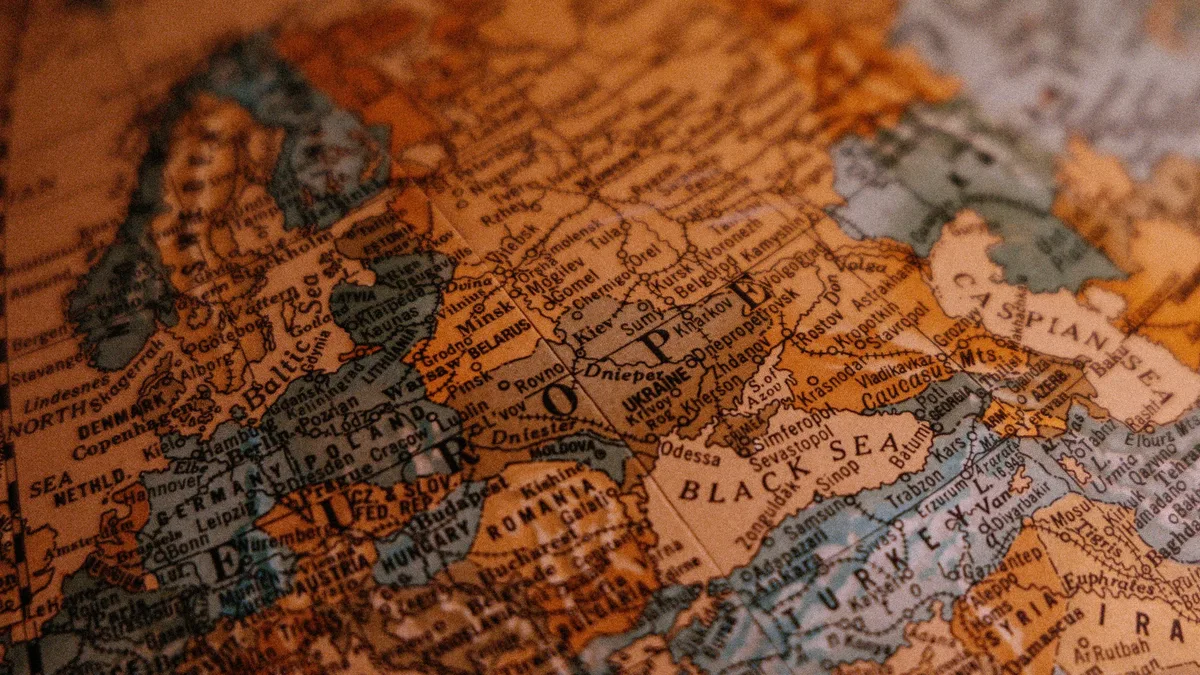
A major European research project has concluded that changing land use, improving soil health, and diversifying water resources are the three primary levers for building climate resilience. The findings come from the four-year Blue Transition project, led by the LIAG Institute for Applied Geophysics, which studied adaptation in 16 pilot regions across six North Sea countries.
According to the project's final report, successful implementation depends on combining robust scientific data with practical governance and long-term cooperation among stakeholders. The project investigated how regions in Belgium, Denmark, France, Germany, the Netherlands, and Sweden can better withstand drought, shifting rainfall, salinization, and other climate impacts.
Regional Solutions for Local Conditions
The 16 pilot regions demonstrated that effective solutions must be tailored to local circumstances. Work in France and Flanders centered on balancing water resource management with ecosystem needs. Southern Sweden and Denmark explored novel approaches to groundwater and urban water systems. In Germany and the Netherlands, pilots tackled issues like soil health improvement, nitrate pollution, and fostering collaboration between agriculture and science.
Across these diverse approaches, several critical success factors emerged consistently. The project highlights the necessity of interdisciplinary work that merges scientific, political, economic, and societal views. Long-term collaboration and knowledge exchange among relevant stakeholders form the foundation for durable solutions. A robust data basis from continuous monitoring enables informed decision-making. Finally, solutions must be transferable to other regions and larger scales, requiring reliable political and financial frameworks for continuity.
"In 16 pilot regions, we were able to show that there are many concrete pathways toward more climate-resilient water and soil management," said Prof. Dr. Mike Müller-Petke, project lead of Blue Transition. "What matters is scientific systems understanding, long-term monitoring and robust data."
The Power of Cross-Border Cooperation
A central conclusion of Blue Transition is that lasting climate adaptation stems from international and interdisciplinary exchange, not technical fixes alone. The project found that resilience arises from the interplay of scientific understanding, local experience, supportive policy, and sustained cooperation. Regions require the flexibility to adapt and test solutions, while connecting local efforts to broader European goals can amplify their impact.
Climate resilience does not result from a single measure, but from long-term cross-border cooperation and joint learning, Müller-Petke stated. The project involved 23 partner organizations and began in September 2022, with results presented at a European Policy Day in Brussels in May 2026. The final report, titled Blue Transition-How to make my region climate resilient, compiles the findings and recommendations from all pilot regions.