Alaskan Rock Glacier Speed Linked to Sunlight and Water
A 2026 study by Southern Methodist University reveals that sunlight exposure and water infiltration, not only air temperature, control the speed of rock
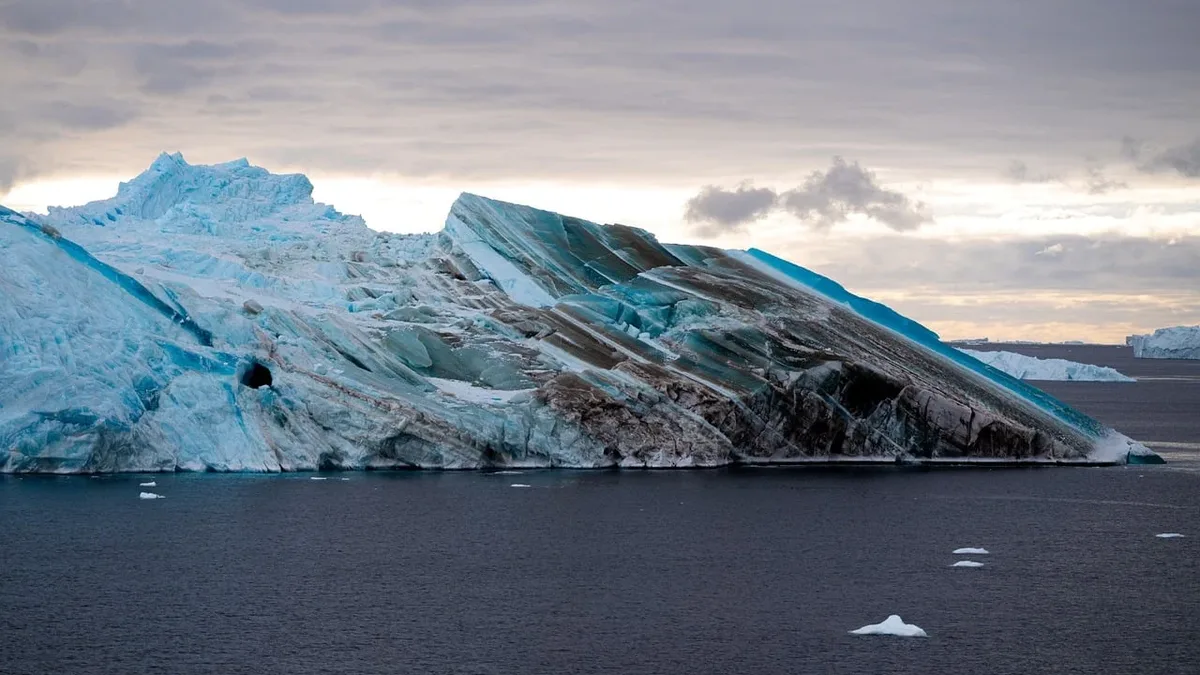
Two rock glaciers in Alaska's Wrangell-St. Elias National Park are moving at starkly different speeds despite their proximity. Research led by Southern Methodist University (SMU), published in September 2026, shows that the south-facing Sourdough Peak rock glacier moves over five feet per year, while the shaded McCarthy Creek glacier moves at less than half that pace.
A team from SMU used five years of European Space Agency satellite radar data, from 2018 to 2022, to map seven active rock glaciers in the park. Rock glaciers are slow-moving masses of rocky debris held together by ice, considered key indicators of permafrost health. The study found that seasonal water from snowmelt and late-summer rain, not annual air temperature peaks, drives the glaciers' motion.
The Role of Water and Sunlight
The radar data revealed a distinct double speed-up pattern at the fast-moving Sourdough Peak glacier. The first acceleration occurred 72 to 84 days after spring snowmelt began, with a second following late-summer rains. "Air temperature peaks once a year, but the rock glaciers we studied sped up twice," said Qingyu Sui, the study's lead author and a Ph.D. Candidate. "That told us something else was at work."
The critical factor is whether meltwater can penetrate deep into the landform to lubricate a buried sliding layer. The researchers' modeling traced the difference between the two glaciers to solar radiation. The south-facing, open slope of Sourdough Peak absorbs enough energy to warm its subsurface, allowing water to reach the layers where movement happens. In contrast, the McCarthy Creek glacier lies in partial shadow, where a colder, frozen upper layer acts as a barrier.
A New Monitoring Method
Zhong Lu, a professor at SMU and the study's corresponding author, highlighted the value of satellite technology. "Satellite radar lets us measure very small surface movements across mountain areas that are difficult to reach on foot," Lu said. By combining these measurements with hydrologic and thermal modeling, scientists can see how climate interacts with local conditions like slope and aspect.
This approach provides a way to monitor thousands of rock glaciers globally without physical fieldwork. The method is important because these landforms store water essential for mountain communities, especially during dry years.
The study's findings, detailed in the Journal of Geophysical Research: Earth Surface, show that local topography and sunlight exposure are primary controllers of rock glacier kinematics. The research offers a framework for assessing permafrost landform stability across Alaska and other high mountain regions as climate patterns shift.